
Diet is one of the most effective ways to keep your peepers in tip top condition. If we don’t take in the right vitamins and minerals, we may be at higher risk of developing common conditions like age related macular degeneration (AMD) and cataracts. So, what foods can help support eye health?
Orange fruits and vegetables
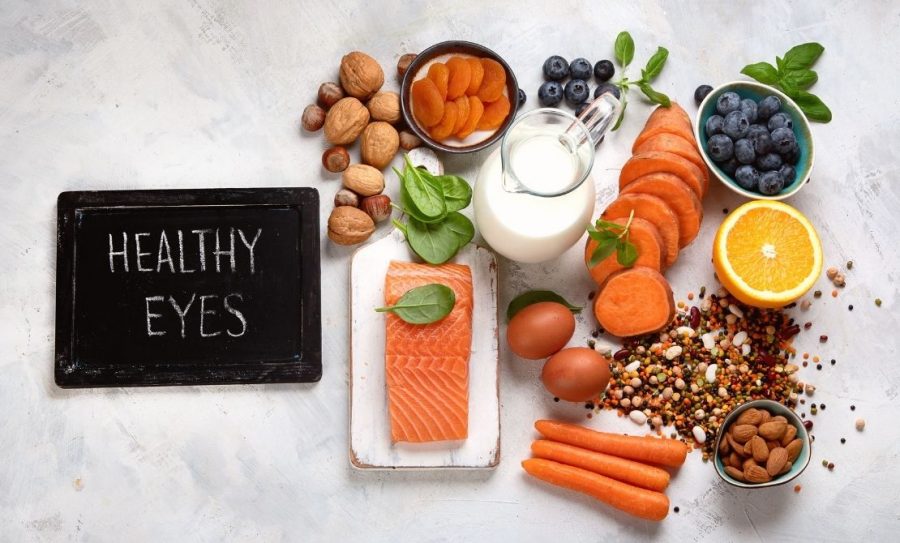
Orange fruits and vegetables like carrots, sweet potatoes, oranges, nectarines and papayas are packed with vitamin C. They also contain the carotenoids lutein and zeaxanthin that help keep the retina healthy. Eggs yolks are also a great source of these important compounds that give foods their yellow/orange pigment.
Leafy greens
Yes, they always seem to be on any list of food to eat for health, but that’s because they’re just full of good stuff. Loaded with vitamins, minerals, the all-important lutein and other antioxidants, foods like spinach, kale, chard, cabbage and watercress help protect against free radicals that can damage the retina.
Omega-3 fatty acids
Research suggests that inflammation in the body can contribute to macular degeneration. As omega-3 fatty acids have anti-inflammatory properties, adding a few more to your diet may help protect your eyesight. Good sources of omega-3s are oily fish like salmon, mackerel, tuna, sardines and pilchards. If you don’t eat fish, nuts and seeds like flaxseed, chia seeds, hemp seeds and walnuts are also great sources.
Vitamin E rich foods
We’ve all heard the old saying that carrots help you see in the dark. While they might not exactly give you superpower level night vision, carrots and other foods rich in vitamin A can help with keeping the cornea clear and support your ability to see in low light. Orange and yellow foods feature again here – apricots, cantaloupe, mangoes, peppers and sweet potatoes – as do dairy products like milk, yoghurt and cheese.
Overall eye health
While eating healthily can help your eyes get the nutrients they need to function well, if you’re at all concerned about your eye health, it’s always a good idea to consult your GP. Early detection could make all the difference if you are developing an eye condition. Regular testing is also important – your local optician will be able to advise you and some opticians offer free eye test vouchers.
You can find some useful information on eligibility for free NHS eye tests and help with the cost of glasses or contact lenses here.