

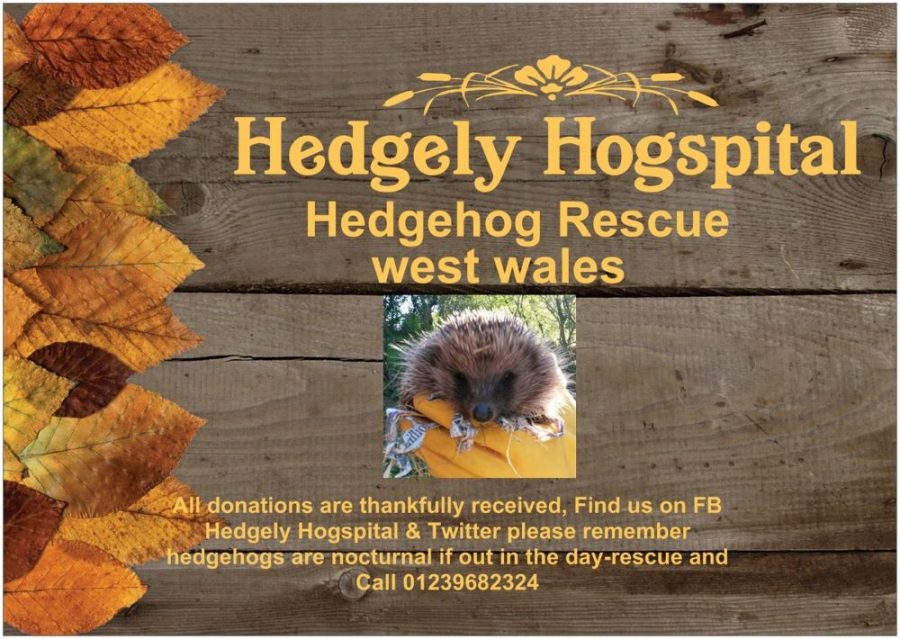
Hedgely Hedgehog Hospital is one of a few of its kind in West Wales, dedicated to the care of sick hedgehogs. With the small mammals recently being place on the Red List, meaning they are recognised as being at risk of extinction, Hedgely are keen to spread the word on these wonderful creatures and to encourage people to learn how to care for them, and provide a natural habitat in their garden.
Natasha Winn set up Hedgely in 2015, based in Abercych near Cardigan, following her own experiences with caring for hedgehogs, which began in 2005 when she found a sick hedgehog at the side of the road. With the help from a vet and realising the limited facilities in the area, she began to think about what she could do to help.
“A year later I did Level Two and went on to do Level Three animal care, the one thing I remember the most was a video of hedgehogs and the dangers they face along with their sweet curious nature; I also did my chosen project on the spikey garden friends. With my life-changes and children, my love for hedgehogs took a back seat.
But in 2014 I ended up rescuing another hedgehog. With Google, and a little rise in hedgehog rescues, I found Pembrokeshire Hogspital. So, I drove to a very kind lady Beryl, who ran the rescue on her own, covering Pembrokeshire, Carmarthenshire and Ceredigion. I talked about how I loved hedgehogs and what an amazing thing she did. I found another and another hedgehog all going to Beryl but each time I learnt more and Beryl became a dear friend, who suggested I start my own centre. She trained me up. I went to Howeys Hedgehog Rescue to see how they ran, and I did the Vale Hedgehog First Aid Rehabilitation course.”
Natasha managed to get support from the vets who agreed to treat the hedgehogs and help with care, at a cost. So, Natasha enlisted a friend to help her.
“I knew I could not do it alone so a good friend started it with me, and the birth of Hedgely Hogspital happened in July 2015. We ran it out of our spare rooms and received cages donated by Pembrokeshire Hogspital.”
Natasha says that the type of injuries or illness that they see in hedgehogs being brought to Hedgely, can depend on the seasons.
“During the end of winter and the start of spring, the hogs that come in are normally very underweight, with high parasite burdens and need fluids, warm food and worming. This time of year, we also get a few road traffic accidents. They wake up hungry, thirsty and wanting to mate and sadly they have no road awareness and are out foraging and males are out looking for females.
During spring going onto summer sadly we see a lot of garden injuries. Strimmers, lawnmowers and hedge cutters cause the most horrific injuries. Hedgehogs don’t tend to run with the noise of these garden tools, instead they just curl up or freeze and hope it goes away. Leading to life threatening and fatal injuries.
In summertime, we start to get a lot of hoglets. These can be due to mum being killed or the nest being disturbed and the mum running off and not returning. Sometimes, females may be ill or injured and they need to come in and they end up having hoglets. We don’t interfere and just treat without upsetting mum and they all go for release when well and the hogs are old enough to go it alone. In autumn and winter, we get late babies in that are unlikely to make hibernation, and normally young ones with high parasite burdens.”
Natasha notes that the hedgehogs are checked over on arrival, regardless of being handed over to a vet or not.
“We are looking for hidden injuries, dehydration caused by high parasite burdens, sickness or drought. They are monitored for behaviour and movement. Stool samples are checked over a period of three days looking for internal parasites. You can’t see most worms with the naked eye, so we use a microscope to do this. Hogs have their weight checked on arrival and then every day, until we are sure that weight is steadily going in the right direction. Then we reduce this, so we not stressing them out with handling.”
Thanks to the hard work that Natasha and her friend do at Henley Hogspital, there have been some lovely success stories.
“A little hog called Tipsy was found unconscious on a roundabout, cold and wet. It was first thought that she was dead. We got her through the night. She had suffered a nasty head injury, which meant she was unable to feed or stand, but with the right treatment she got stronger. She then needed a lot of physiotherapy, as she would not curl up, although she could. After all our hard work, she doubled in size, could curl, run. Then, human contact was dropped and her natural weariness of humans became present and she made a full recovery.
We had a little hog in with swimmers syndrome. Never before had we seen this in a hoglet. Daily physio and this little hog, that would spray his legs out pushing himself along, got better and better till the point you would never of know he had swimmers and went back to Moylgrove.”
Natasha is keen to share tips for what people can do in their own gardens to help accommodate hedgehogs and ensure they are kept safe.
“One of the biggest things is access. Hedgehogs need to get in and out of your gardens and encouraging other neighbours to do the same means hedgehogs can find mates and have more access to food.”
Poisons and chemicals are sadly a cause of death in hedgehogs. They eat the poisoned food and suffer secondary poisoning, and the overuse of chemicals can cause burns, but also has a negative impact on the insect population, thereby reducing availability of their food source.
Small changes, like having an overgrown area with wildflowers, rotting wood piles and letting nature find a balance and encouraging hedgehogs to your garden, will all help.
Ponds can be a real asset to the garden, encouraging lots of wildlife, but hedgehogs must be able to climb out. They are good swimmers, but cannot swim forever, so making a ramp or piling stones up one side is essential. Remember, hedgehogs need to roam and they need a hole about the size of a CD to be able to get into your garden.
Other dangers hedgehog face include uncovered drains and holes. They just follow their noses on the scent of food, as they have poor eyesight and so, can easily fall and get stuck. They also get caught up in all sorts of netting from pea netting to football netting. Making sure netting is off the ground in the evening, will help them not get trapped. Other dangers are strimmers and lawn mowers. Remember, hogs will curl up and not run. Check first by using your foot or brush, and if you do find one, put it in a box until you’re finished. Afterwards, release it back in the undergrowth, unless it is sick or injured in which case do rescue it.
Compost also encourages hedgehogs, so beware and take care when sticking a garden fork in.
During spring and autumn, when people are having bonfires, do remember to build on the day, or move the bonfire, before you light it. Bonfires that have been left for any amount of time are attractive hedgehog hotels and are ideal for nesting in. Always think of hedgehogs when gardening, and you will keep them safe.
You can make purpose-built houses for hedgehogs and feeding stations. These things can really help a struggling hedgehog and encourage them to visit.
In Hedgehog awareness week (2nd-8th May 2021) Hedegely, with support from the British Hedgehog Preservation Society, asked local people to celebrate and share their knowledge of hedgehogs by being creative and making a picture, collage or poem.
Natasha emphasises the importance of such an event on educating the next generation.
“It’s important, so all the rescues really push to raise awareness just as we are heading into hoglet season. It is lovely to receive poems and pictures, especially from children as they are next generation, to try and protect this species from becoming extinct in the UK.”
A collection of hedgehog inspired creations can be viewed on the charities Facebook page.
Looking to the future of hedgehog species and the development of Hedgely Hogspital, Natasha is hopeful of more positive developments
“We’ve been very lucky to get some funding to replace Bramble Ward shed that was no longer fit for purpose, so just having that will be hugely helpful. We also plan to buy new ICU units. We would like to expand further, as last year we had to close to new admissions for short spells, as we were completely full. However, we do need more helpers, unfortunately we lost a few volunteers since Covid. They have retired from the basic cleaning and health check side. We also need help with running the Facebook page, so we do need more hands-on help.”
She also notes that we all have our part to play in preserving the wildlife around us
“We really hope that in the future hedgehogs will have more protection. Councils need to take responsibility to ensure hedgehogs are looked out for and thought of in new developments and on busy roads where hedgehogs cross. A simple hedgehog sign may help to slow some people down. If we all did a small bit, it would have good impact in the end.”
Hedgely’s guide for helping hedgehogs.
WHEN to rescue a hedgehog
When to rescue and how to rescue is an especially important question. Hedgehogs are normally nocturnal. A hog out in the day is likely to be needing help.
However, May to November a female hedgehog may be spotted out in the day and she needs to be left well alone. She should be walking with a purpose and or have bedding material in her mouth. If you quietly watch you may just see where she planning to build her nest and know to stay away but you could leave water out and some food away from the nest but in the garden.
If you find a nest while gardening cover it back up and stay away. If mum has run off. Keep an eye on the hoglet but leave them in the nest for a few hours. Hopefully mum will return but if not sadly the hoglets will need to come in. Always ring for advice in this case asap. Hoglets need their mum and wont cope without her for too long but its’ always best mum brings them up.
You can reach us by phone 07792676112 or find us on our Hedgely Hogspital website.
Hedgehogs laying out in the sun or with flies buzzing round are in urgent need of help, and the same goes if the hog is limping, crying or looks drunk and unsteady. Any hog that has been trapped in netting will also need to come in.
HOW to rescue a hedgehog
Hedgehogs are most likely going to curl up and hide their soft underbelly when frightened. An old towel or gardening gloves will enable you to pick the hedgehog up and place it in a high sided box.
Please rescue a sick or injured hog straight away and then phone immediately, as quite often a hog in need will move away once you have gone in. Once the hog is in a secure box, we will be able to advise you. Quite often they are cold and shut down and need a hot water bottle. However, if they have flystrike, they really need urgent help to remove the flies’ eggs before warming them up. So, it is always best to ring or rush them straight a vet for help.
Find out more about how you can help support Hedgely and become involved in the work that they do. For more tips on helping hedgehogs in the wild visit the British Hedgehog Preservation Society website here.